Is the Southern Hemisphere Set for a Climate Advantage?

This post, written by Stanislav Sinitsyn, was originally published on the New Climate. It's shared here with permission.
From geography and essentials, to governance, migration and energy: the open secret of southern climate resilience
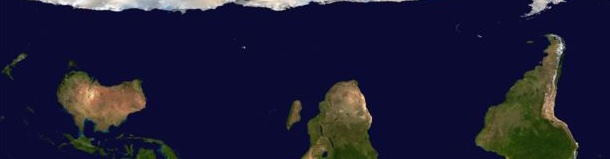
Hello from the other side. Image credit: Wikimedia Commons & NASA, public domain image cropped & upscaled by the author
Turn a globe until the South Pole faces you. The world changes shape. The old familiar centers of power slide out of view. America, Europe, China, the oil states of the Middle East: all fade beyond the outer rim. Water fills the frame: vast, cool, and stabilizing. Insulated landmasses here and there, cradled in the oceans’ embrace.
Most climate conversations are not pointed here. The Arctic frontiers of Canada, Alaska, and Scandinavia tend to hog the limelight. The logic is understandable: colder places should age better on a hotter planet. That, of course, is only half the story. The half it leaves out has less people, fewer smokestacks, cleaner air, wider oceans, and a very different relationship to heat.
Climate change is brutal, uneven, and unjust. Nevertheless, the aim for this article is to be honest and hopeful. Geography matters, so does water, wind, food, distance, governance, migration, and energy. Some places will face this century far better prepared than others. And some of the most resilient sit far below the line that most people are watching.
In that sense, the Southern Hemisphere is climate’s “open secret”.
Breathing Room

The Southern Hemisphere is known today for some of Earth’s most strikingly beautiful landscapes. In a post-climate-crisis world, it will become known for two distinct advantages.
Unlike The North, it’s mostly ocean. Look down at Earth from space at just the right moment and you would be forgiven for thinking we live on a water world.
The world’s largest ocean is the great stabilizer. Anyone who’s experienced a sunny Californian beach day in January can tell you just how impactful it is. It absorbs and releases heat slowly, buffering nearby land from the most violent temperature swings, year round. It’s also the reason Vancouverites enjoy cool summer mornings, while folks just a few miles east swelter.
So, we come to the first advantage:
1. The southern half of the planet is warming slower than the north.
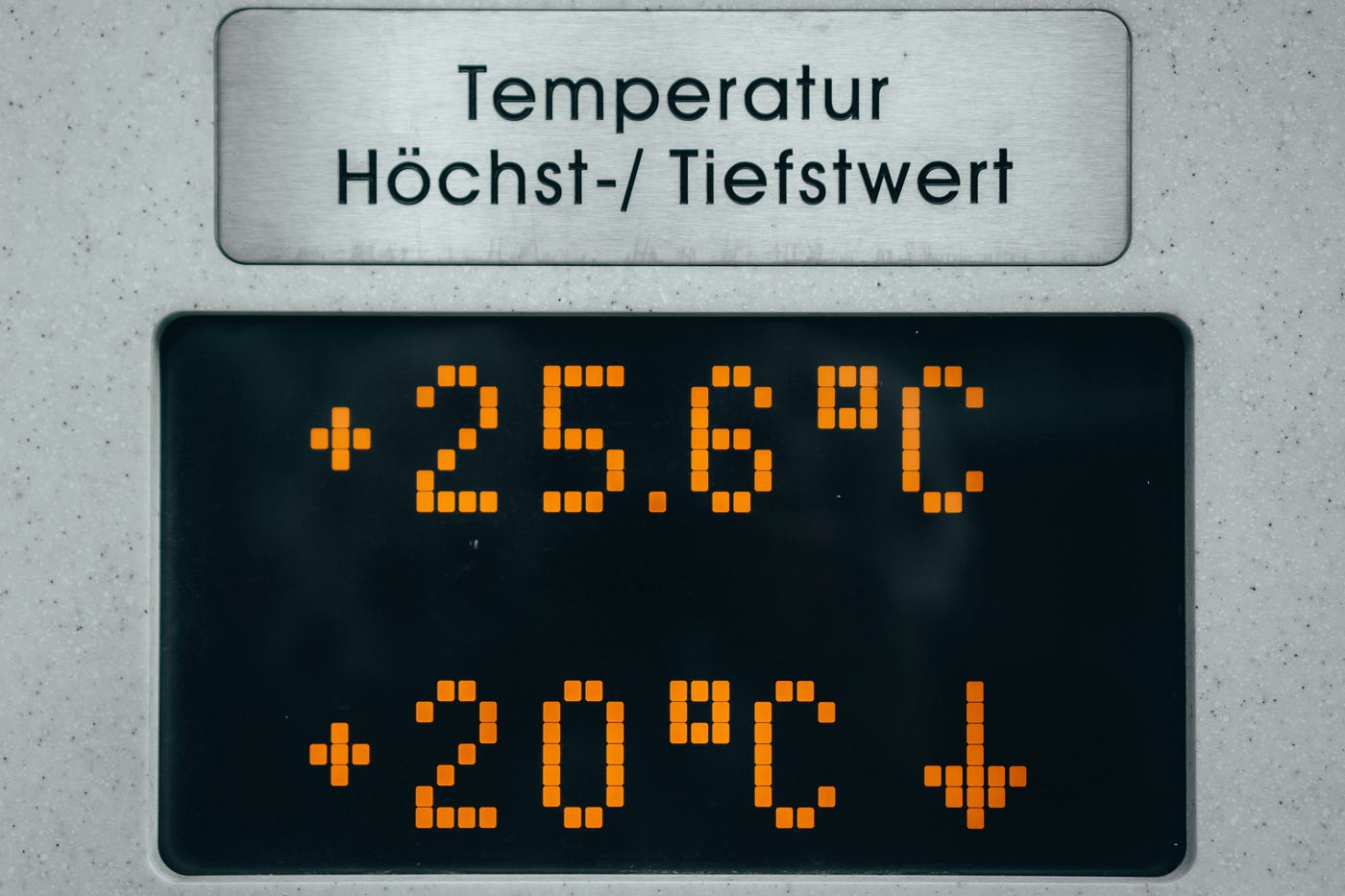
By the end of the century, The North is expected to be a full 1.6C warmer than The South.
That may not sound like much, but consider that the difference between 1C and 5C of warming is, quite literally, catastrophic.
I know climate writing can sometimes lean dramatic. However, in this case, it will be the difference between life and death for some. It was for precisely this reason that, not too long ago, the world was hoping to keep temperatures from rising 1.5C above our pre-industrial average. As the century unfolds, the slower pace of warming will become more apparent with each passing year. Brutal and prolonged summers are coming for The North. In as little as 25 years, daily summer highs in the upper 40–50C range will become the new normal. The densest parts of the Middle East, North Africa, South Asia, and the American Southwest are most at risk.
The southern hemisphere won’t be spared entirely. However, the transition is already proving more gentle.
Summers in places like South Africa are only expected to regularly hit the upper 30’s — low 40’s in the same period. Brazil has yet to record a single day over 45C. Only the more remote inland deserts of Australia experienced a day above 40C. That doesn’t mean these changes can be dismissed; they too destroy livelihoods and ecologies. The 2026 Australian brush fires are one such example. However, these pale in comparison to the 70,000 heat deaths we’ve already seen in a single summer, in Europe.
From a survivability standpoint, we are not in the same ballpark.
Split The Sky

The second advantage is:
2. The air itself.
Earth effectively has two atmospheres. Of course, strictly speaking we only have one. Functionally though, our two hemispheres do act like separate systems.
Earth’s rotation creates streams of air traveling east to west (and in reverse) in each hemisphere. These are known as ‘trade winds’ and they converge at the equator. The 50 km thick air barrier that separates them is called “The Chemical Equator”. Aside from sounding like an excellent emo band, it produces surprising weather patterns. Within each hemisphere, it takes only a couple weeks for air from one side (say China) to travel to the other (America). However, it takes much longer for air to travel through the equator. That air over China today can take upwards of two years to end up over Australia. The pollutants simply hitch a ride. Since most of Earth’s megacities and heavy industry are also in The North, the Chemical Equator functions to keep southern air 4x cleaner.
Think of Earth’s atmospheres like two separate whirlpool hot tubs, connected by one thin pipe.
One side is crowded, shared by eight people. The other, equally spacious one, has only two occupants. The crowded hot tub is not only cranking the heat to unbearable levels, but all 8 occupants are relieving themselves in the pool. Given enough time, both tubs will be swimming in the same hot, polluted, water. However, the tub of two is going to be able to enjoy their experience for much longer.

If the previous analogy made you want to jump out of your crowded northern hot tub, where is it you should aim for?
Vast swaths of ocean are double edged swords; options in The South are more limited. There won’t be economic tailwinds from new shipping routes, for instance. However, they come with their own unique set of benefits. One of which, may just be the highest quality of life the year 2070 has to offer.
Patagonia: The Green Energy Frontier

Most people don’t associate Latin America with ice. Yet, the far southern reaches of Argentina and Chile are defined by it. There lies the stunningly beautiful, mountainous, and chilly land of Patagonia. Its precisely that ruggedness which inspired the “Patagonia” clothing brand. Today, it enjoys more global recognition, despite not even being headquartered in their namesake.
This region stands to benefit from warming in many of the same ways Canada does. Despite facing diminishing rainfall, the region has ample freshwater reserves from its multitude of lakes and glaciers. If properly tapped, they could support a much larger population and industrial base. Longer growing cycles for soybeans, corn, and even wheat are all set to benefit Patagonia.
Graze lands are also shifting south. You’ve enjoyed their product if you’ve ever dined at a famed Argentine steakhouse. As with Canada, the melting ice reveals new nutrient rich, pollution free, arable land. A critical point for a country where agriculture leads exports. Hopefully, the old world wines of Chile and tender beef of Argentina will remain on our menus.
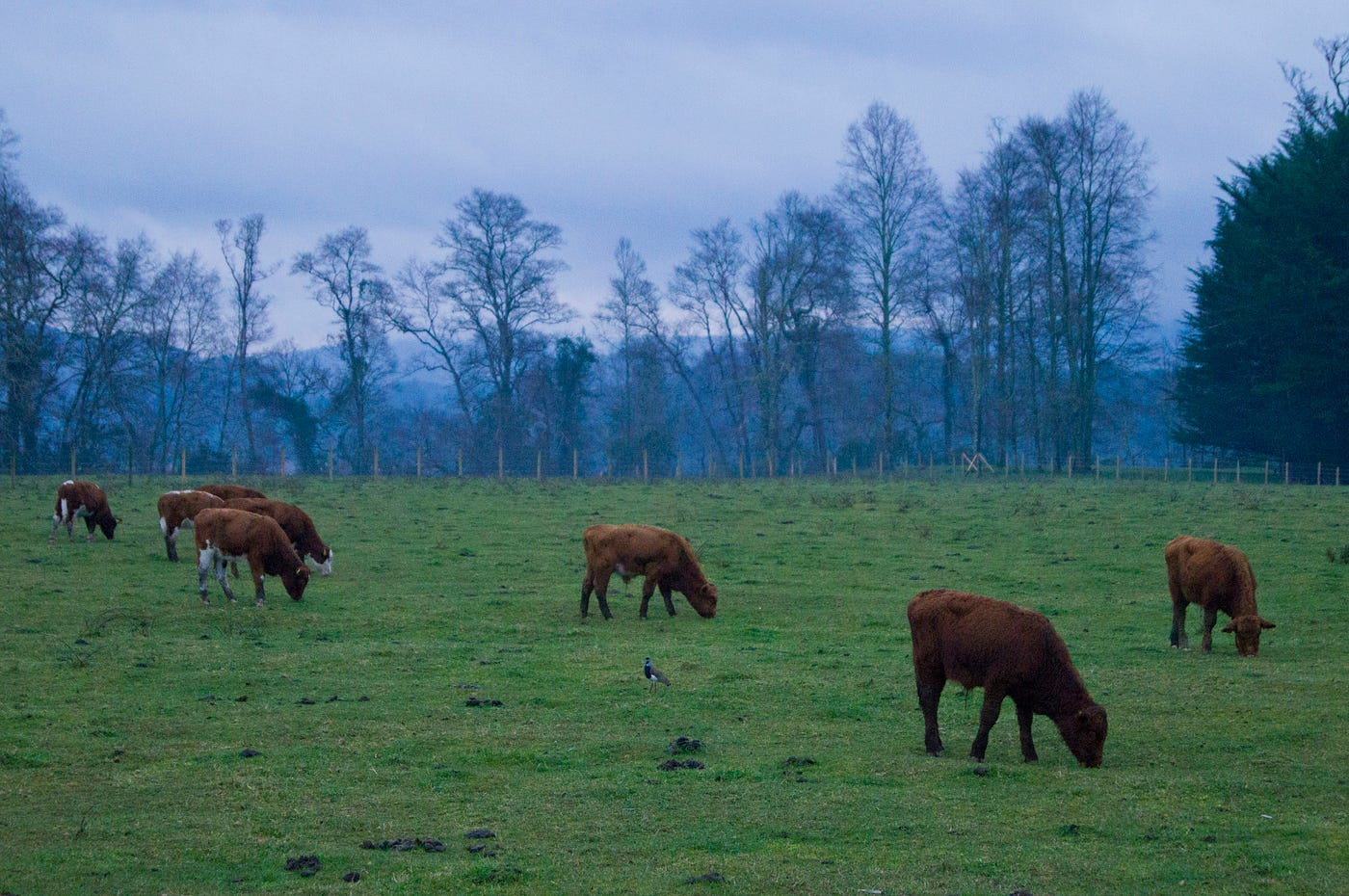
Patagonia is the largest swath of land below the 42nd parallel south. As a result, it will likely be the first port of call for climate migrants within Latin America. This will be especially true if northern countries continue to tighten, militarize, or even close their borders. As refugee crises worsen, arable land, far from conflict, may seem like a godsend. Populations will likely move south.
Yet what makes Patagonia truly exceptional is blowing in wind. I mean that quite literally. The Magellan Strait and Patagonia’s plains are described as “an embarrassment of wind energy riches”. There, average wind speeds are 12 meters per second (27 miles per hour for my American readers). It’s an incredibly consistent amount of free energy. The historical challenge has been in moving that energy to where it’s used. This is quickly changing, and not just due to population.
“I want to say one word to you, just one word — Hydrogen”

A fiercely debated molecule (the Welding Institute published a great impartial summary of both sides), detractors argue against on the grounds of storage, safety, and costs — both economic and environmental.
It’s precisely those costs that Patagonia’s free, fierce, and ample winds are set to disrupt. The government of Chile provided the necessary kickstart in 2022, to the tune of $50 million. By 2030, total public-private investment in ‘green hydrogen’ is expected to balloon to $45 Billion. Chile firmly believes they can produce the world’s cheapest hydrogen fuels. The Magellan Strait alone is capable of producing 13% of the world’s supply.

Supply for what? The most promising applications involve long distance haulage. These are sectors that batteries serve poorly: shipping, aviation, heavy industry, and possibly space. Hydrogen is 3x more efficient than jet fuel, with zero emissions (the ‘waste’ from burning hydrogen is water vapor). Airbus’ three new ZEROe aircraft, slated for early launch in 2035, are prime examples.
The most immediate use case within Chile is hardening power grids. When winds are roaring and the sun shines brightly, the surplus power can be turned into cheap hydrogen via electrolysis. That energy is then returned at the point the grid needs it most. In a post climate-crisis world, this saves lives. It prevents deadly (and ever more frequent) heatwave related blackouts. All the while, the nation’s carbon footprint remains stable.
White Fuels Green
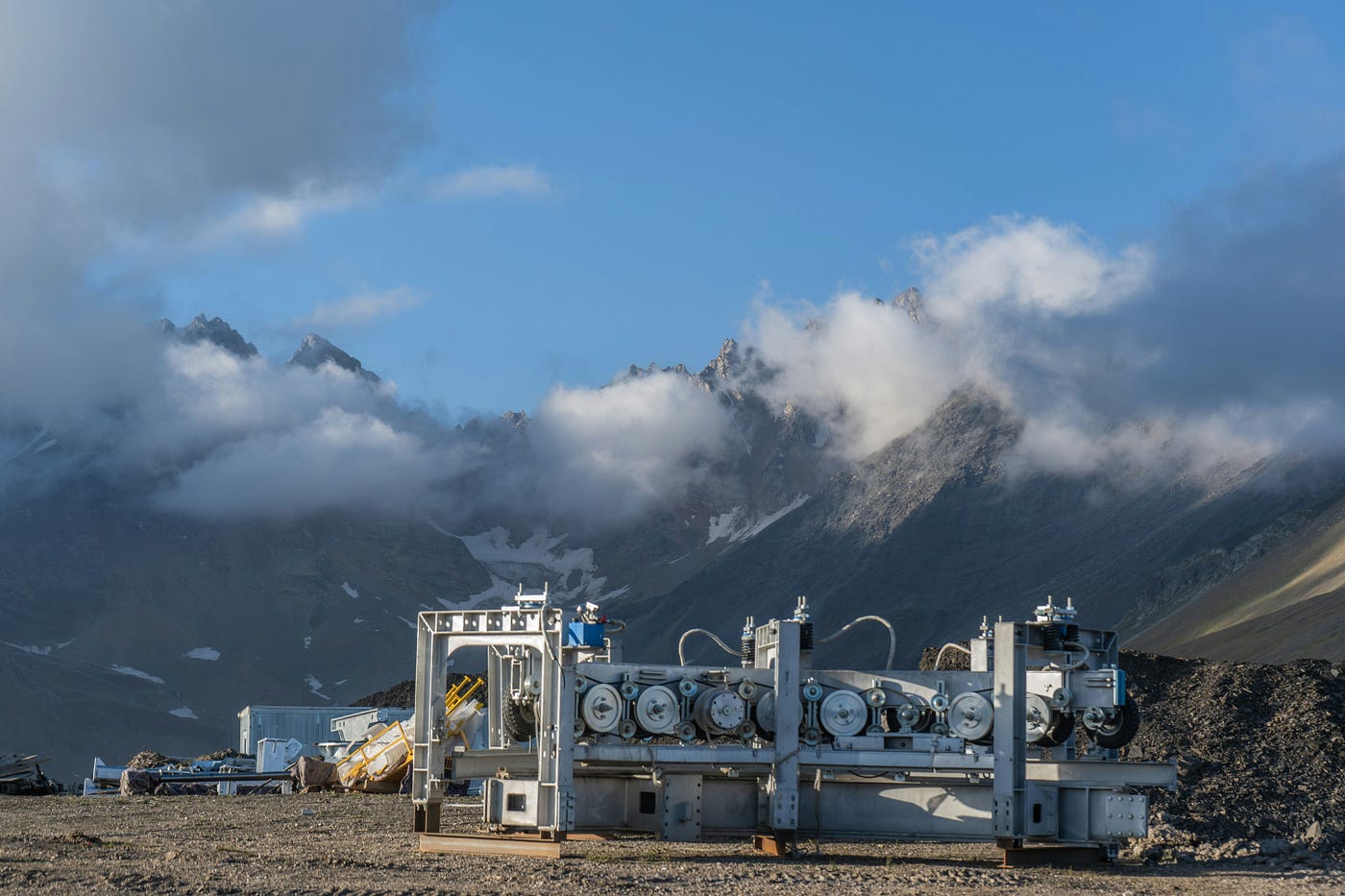
Even outside the hydrogen hype train, it’s hard to deny Chile’s natural advantage. Long coastlines and highly diverse biomes strongly position it to become a preeminent green energy producer. The Atacama Desert is an ideal location for solar farms. Winding coastlines along the Pacific Rim are primed to deliver geothermal and wave energy. Combined, they could supply locals (and then some) with sustainable and reliable sources of electricity.
Green energy initiatives are often plagued with soft and nebulous future commitments, rarely arriving on time (if ever). That’s not what we’re discussing here. As of 2024, Chile generated 62% of its electricity through renewables. It plans to eliminate coal power plants by 2040 and achieve carbon neutrality by 2050. The real prize, though, is Chile’s ability to export green energy to the world. This comes in the form of both hydrogen fuel and rechargeable batteries.
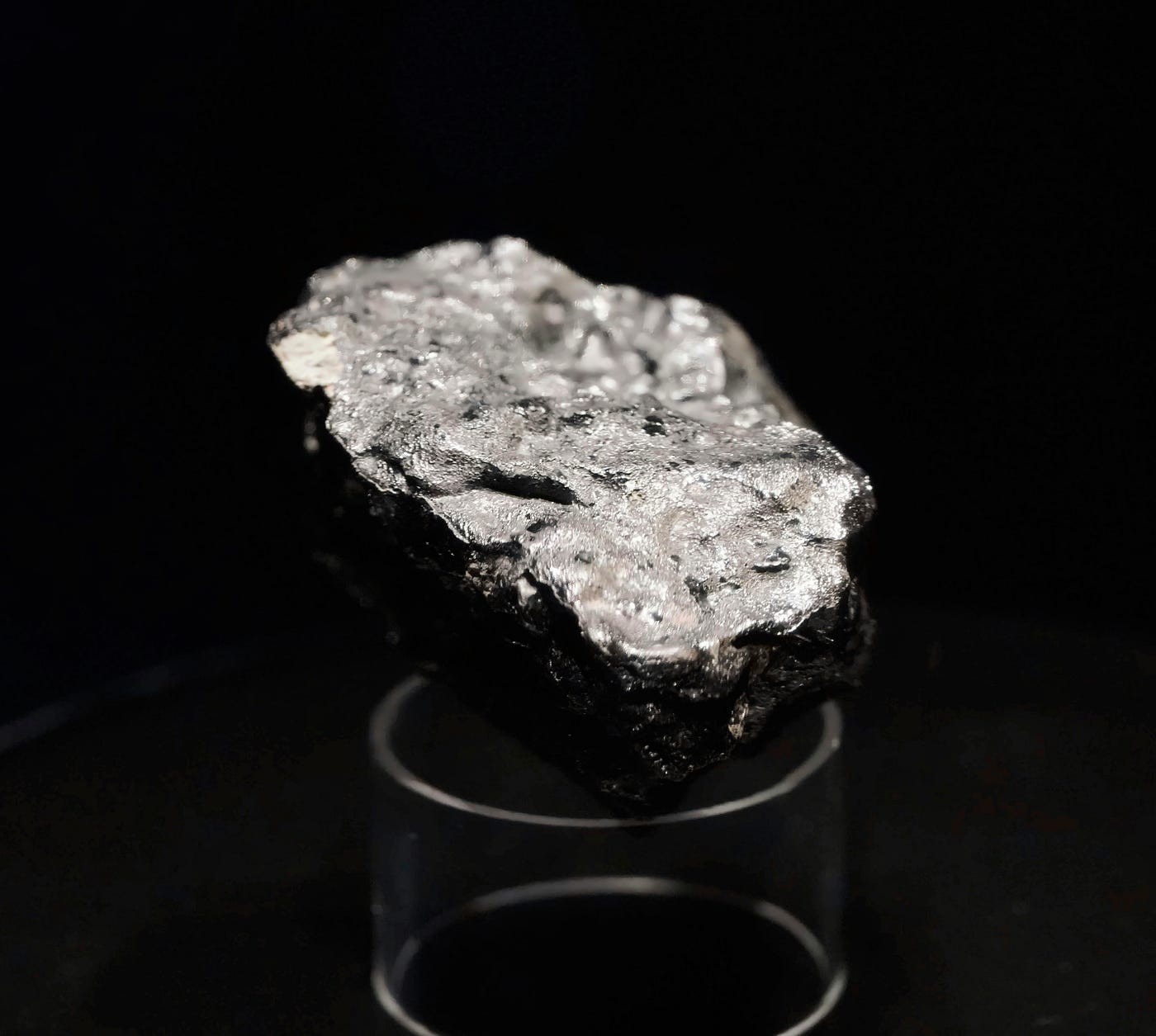
Chile proudly sits on 1/3rd of the world’s known lithium reserves, more than any other country. Patagonian neighbor Argentina also sits high on that list, with half the volume. Lithium is known as “white gold” for a reason — it is the element that allows modern batteries to function. It underpins not only electric cars but the entire green energy transition. Extracting that lithium is a dirty business. Yet, storing energy at night or when the wind and waters are calm, would not be possible without it.
You’re likely reading this on your phone, laptop, or tablet. If so: you’re holding a piece of lithium right now, and there’s a good chance it came from Chile.
In short, Patagonia has all the trappings of becoming a global green energy hub. And Chile is one of the easiest countries to migrate to — it offers a business visa with no minimum investment. That doesn’t mean free, but it does mean accessible.
Tasmania & New Zealand: The Last Bastions

New Zealand has made headlines as “Earth’s lifeboat”. After COVID-19, that statement actually earned some scientific plausibility. The more infamous headlines pitch her as the preferred refuge for the world’s wealthy elite. Well, perhaps not… Peter Thiel’s “Billionaire Bunker” was blocked outright by the local council. Aotearoa, as the locals call her, arguably deserves the high praise. However, there is more than one damsel at this dance.
1,500 kilometers (932 miles) west lies the Australian island state of Tasmania. Like her stunning, more popular, and tattooed cousin, she too is building a world-class climate refuge. The locals call her Tassie. To me, she’s carries a certain air: part Scotland, part Northern California. You likely first heard of her through this guy; though they have a troubled relationship. In climate circles, her claim to fame is hosting Earth’s Black Box. As you can probably tell, she prefers to fly under the radar.
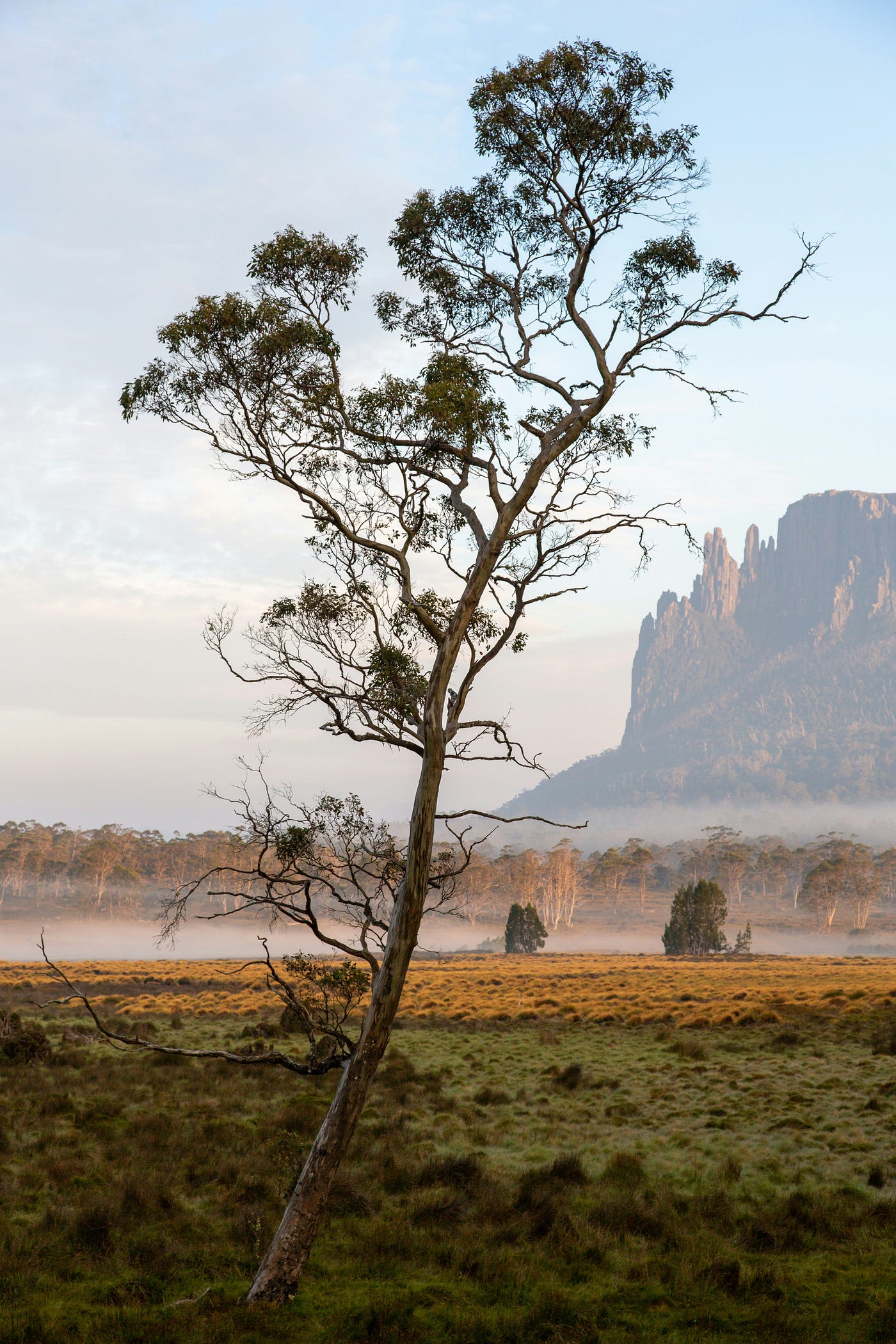
So where does all this refuge hype come from? Let’s begin with the basics: food and water. New Zealand is one of the most water-rich nations on the planet. She boasts 145 million liters per person. That is 16x the United States, despite the massive natural reservoirs of The Great Lakes. While Tasmania holds 12% of all freshwater on the entire Australian continent. It’s well managed too; a system of over 50 major dams dot the island. We’ll return to that point in a moment.
Both regions have plenty of arable land. New Zealand has the farm acreage of the entire UK, despite having half the population of London. Both are blessed with long growing seasons. These last up to 180 days and are only set to lengthen in the coming decades. The Tasman government is particularly bullish on their agricultural outlook: 80% of the state’s harvests are exported. Official channels openly talk about climate change as an advantage to local agribusiness.
Masters of Mitigation
Islands have another natural advantage: Biosecurity.
This one becomes more important with rising temperatures. Warmer climates lead to the spread of invasive species and the new pathogens that come with them. The ability to prevent pests from making landfall and destroying crops is critical. Yet, it’s a privilege that continental powers simply cannot exercise. Just imagine setting up a quarantine along multiple winding borders. Monitoring and controlling thousands of miles of land 24/7 is just not feasible. Consider that something as minuscule as an insect or a worm could trigger a new pandemic.

For well developed and isolated islands such as Tassie or New Zealand, it’s a completely different story. Instead of “anywhere along a winding border”, the scope is reduced to “just a few ports of entry”. Even if a pest slips through a checkpoint, rapid mitigation or even elimination is a real possibility. This capability isn’t just theoretical. We’ve already seen deft competence in eliminating a much smaller dangerous intruder.
During COVID-19, New Zealand closed its borders to focus on mitigation. Life returned to normal remarkably quickly, just 74 days after the outbreak. You read that right. While most nations were scrambling for containment, Kiwis had already eradicated the virus. Social distancing stopped, events resumed, and the last mask mandate lifted by June 8, 2020.
It’s a case study in just how effectively islands can enact border controls. Yet, a more uncomfortable realization lurks just below the surface: it can be applied to migration as well. In the coming decades, Europe and the Americas are headed for combined climate and migrant crises. In contrast, the geography of Tassie and New Zealand enables more regulated and sustainable resettlement programs. Of course, that privilege doesn’t come without steep ethical dilemmas that Kiwis will need to confront.

How many could actually be taken in? On paper, quite a lot.
This region happens to be one of the most underpopulated in the developed world. Tasmania’s population density is only 8 people per square kilometer. New Zealand is around 20 / sq km. This is FAR below even the least populated European countries. Countries that, in comparison, don’t have the same abundance of natural resources. Ireland, another developed island nation, is currently sitting at 77 persons / sq km (which is low by European standards — Germany is at 239; The Netherlands, 548).
The Royal Society of New Zealand found that it could easily double in population and still remain sustainable. The report even suggested that a quadrupling of the population within these limits was theoretically possible. Of course, density and ecology are not the only factors. Landmark investments in housing and infrastructure are required to actually make that figure achievable. Separately, those ethical dilemmas will manifest themselves in debates over land rights and social consent. Those too will determine the real ceiling.

Tassie is moving faster in this regard. 2019 marked the first year that climate became the dominant reason for migration to the island.
Let’s not understate what that means: climate surpassed ALL other traditional migration drivers.
It was climate… not family, not work/life balance, not even affordability, that brought people to Tassie’s shores. As of 2023, roughly 1 in 10 Australians were planning to migrate as a direct result of warming. Tassie will likely be their first port of call.
Plugged In
Migration pressures only lead to opportunity if the receiving region can power, house, and connect that growth. That is precisely why this region is more than a scenic refuge. Both Tassie and New Zealand have already proven themselves to be models of self-sufficiency. Simply put, they leverage geographic advantage to punch above their weight.
As with Patagonia, they are green energy powerhouses poised for growth.

Tassie has been running entirely on renewables since 2020. Carbon neutrality has been maintained for the last six years. Much of it is thanks to that large network of hydroelectric dams mentioned earlier. The next phase is export.
Tassie is about to become the “Battery of the Nation”. Far from an empty PR moniker, it’s an accurate description of an ambitious infrastructure project currently underway. You’re probably picturing it right. Tasmania will literally be “plugged in” to the mainland Australian grid in 2030 via a set of undersea cables. The official name is The Marinus Link project. It will soon be feeding an entire continent energy during the winter.
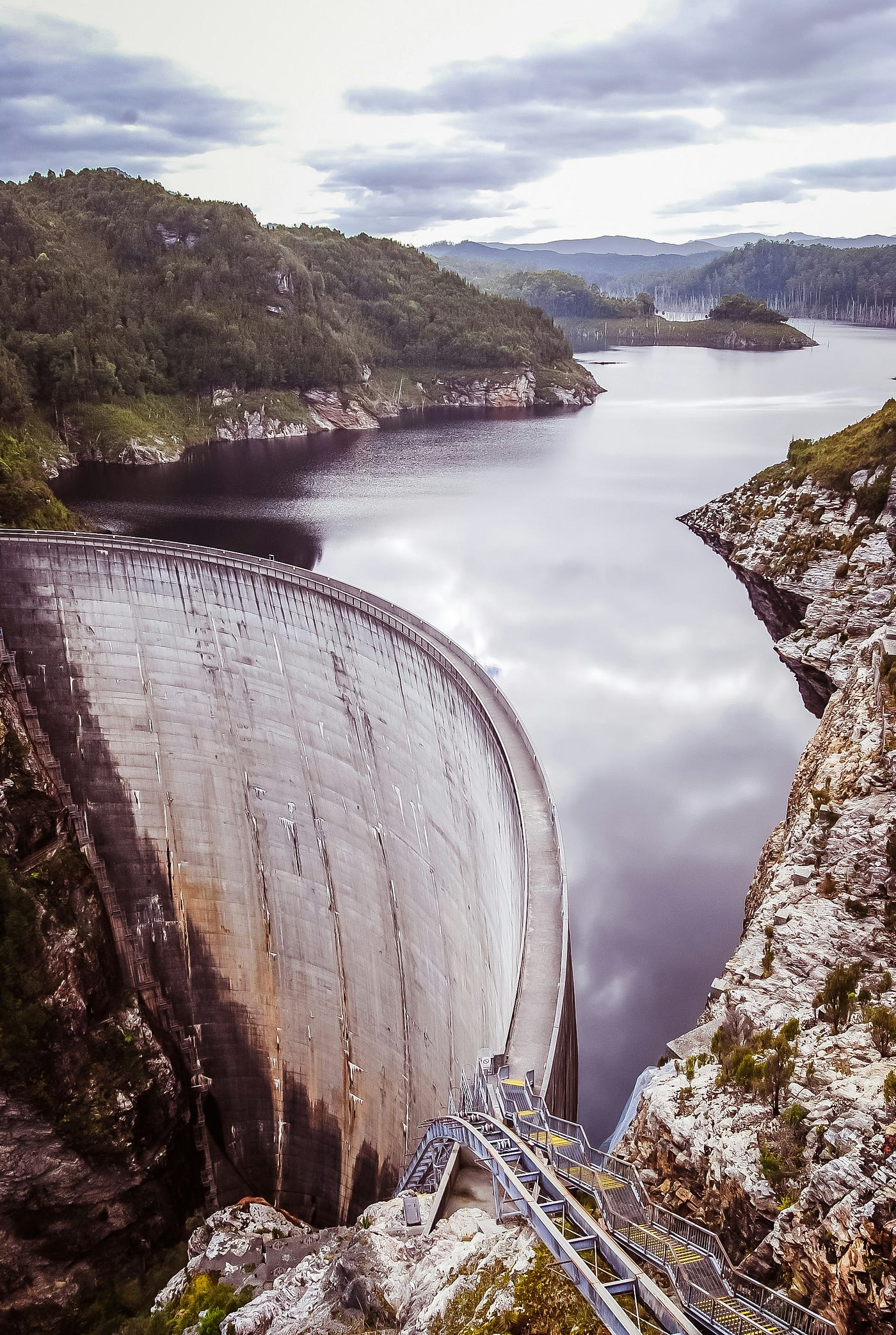
As if hydroelectric prowess wasn’t enough, Tasmania is also home to powerful winds. “The Roaring Forties”, as they’re called, could be leveraged into a wind energy factory. In this way, Tassie’s relationship to Australia mirrors that of Patagonia to Chile.
Australia, with its vast mineral wealth, is poised to capitalize on green energy exports. Recall that earlier we mentioned the scale of Chile’s (1st) and Argentina’s (3rd) lithium reserves. Care to guess who sits second on that list? Indeed, it’s Australia, and as of 2023 a hydrogen plant has already been proposed. A $50 million investment has been set aside for a pilot program.
What’s more interesting is how that power will be used. Alongside the power cables, the Marinus Link is also laying state-of-the-art fiber optics. Digitally speaking, this does a lot more than put Tasmania “on the map”. It’s set to be become a new competitor to Asia’s data centers and just a stone’s throw from Silicon Valley.
Despite the ubiquity of AI, we tend to think of “the cloud” as somewhat separate from our physical reality. The truth is that Claude, Grok, and Gemini all live in server farms and data centers, all with very real addresses.
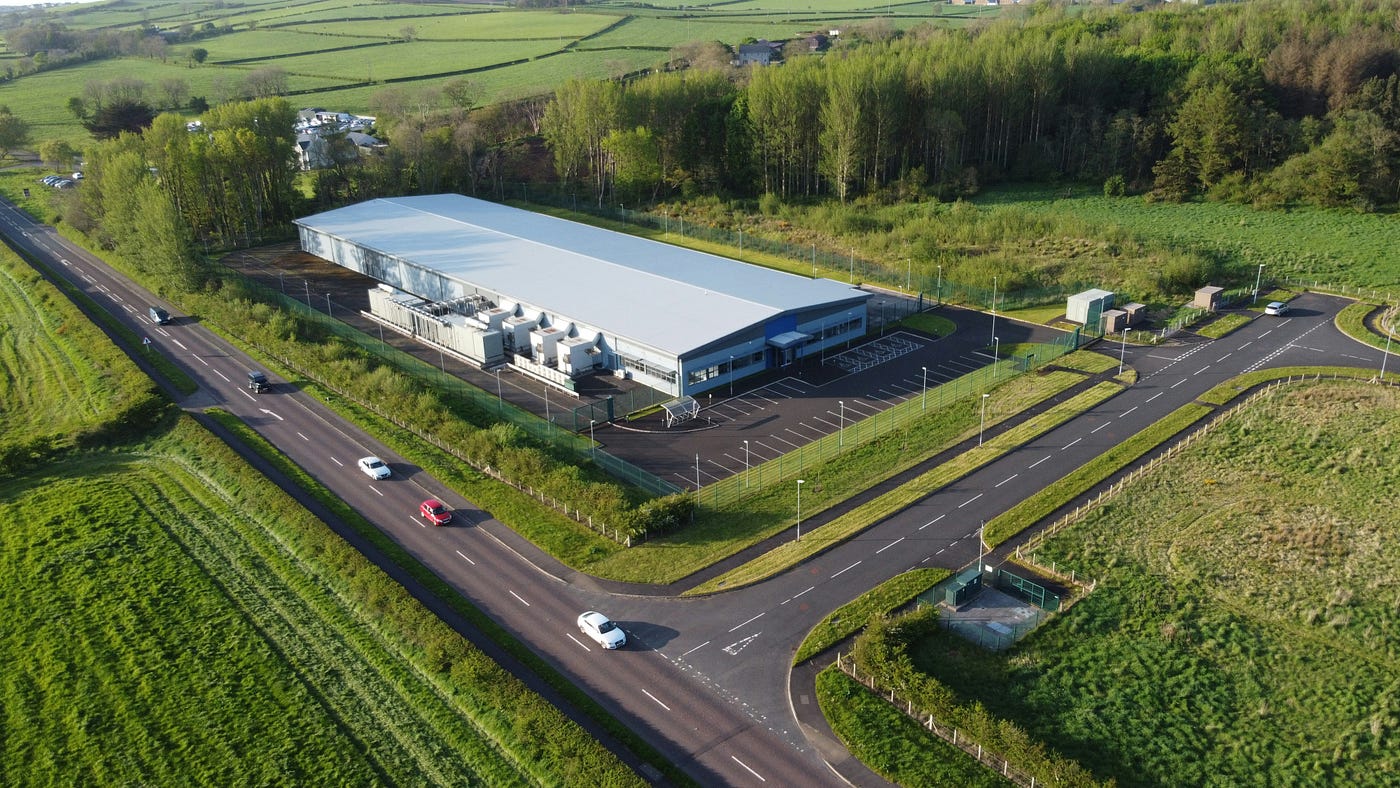
Warehouses with computers need constant care, cooling, and a steady supply of power. If anything, they are more at risk from climate change than we are. Inclement weather, blackouts, heatwaves, droughts, and logistical breakdowns all spell doom for AI. The companies behind the models are well aware of this; it’s why they’re building hubs across the world. Think of what Tasmania’s advantages mean to them. Cheap, abundant, renewable energy, sourced from a cool, slowly warming, locale makes for a prime location.
It’s the same logic that’s likely attracting projects such as Earth’s Black Box to the island. With the Marinus Link, Tassie remains remote enough to be insulated, but connected enough to be a global player.
Thriving, Not Just Surviving
New Zealand is right on Tassie’s heels. She’s already 80% powered by renewables and expected to close the gap by 2030. Her energy advantage is the Pacific Rim. It’s a world-class, renewable, geothermal resource that remain largely untapped.
Potential needs investment to be realized. It’s the well organized, resilient, low corruption, and broadly trusted governments are usually the first to attract it. Even in the thick of COVID-19 and the divisiveness that followed, at least 80% of Kiwis supported their government’s handling of the crisis.
“In a century where climate change destabilizes states, good governance is the infrastructure.”

Of course, no country on Earth is a “blank slate”. These islands were some of the last places humanity touched, and even that was centuries ago. Every place has its own history, treaty obligations, sovereignty debates, housing pressures, and social limits. None of these are easily navigated. In fact, it’s that very difficulty which causes these challenges to go ignored by both locals and immigrants alike. Fortunately, New Zealand has a strong track record.
Take, for example, New Zealand’s integration, celebration, and empowerment of its indigenous population. The native Maori still govern many of their sacred places today. They have significant representation on a national level. Their culture and norms continue to shape the country. It’s not all smooth sailing, of course; no nation is perfectly egalitarian or free of racism. Inequalities in health and economics, as well as past traumas, still impact these communities today. However, the Maori represent a deeper level of integration into their country than most indigenous groups. What New Zealand proved is that inclusivity is not just lip service. It’s an important part of their culture.

Perhaps if any country has a shot at deliberate and sustainable integration of climate refugees, it’s New Zealand.
The “Ay-En-Zed” Advantage
New Zealand and Australia are best understood as a paired system.
What’s often depicted as “two remote islands” are perhaps the most inter-connected nations on the planet. Through their sibling-like alliance, they share openly in migration, labor, trade, defense, and culture. Crucially, permanent residency in one sets you up to quickly live and work in the other. Fortunately, New Zealand is also among the 10 easiest nations to migrate to.

The Trans-Tasman Travel Arrangement is the best BOGO deal on the face of the Earth.
As climate pressure rise, I expect both nations’ close, bilateral, cooperation continues to deepen. Energy, migration, food, defense, data infrastructure, and disaster response all pull them toward tighter alignment.
Nowhere on Earth will be fully shielded from the climate crisis. However, the Southern Hemisphere is increasingly posing the question: which hot tub would you rather be in?
This article is the tenth in my efforts to demystify climate science, its impacts, and provide tangible tools for individuals to take action. You can read my other work on this topic via my bio.